






























What is the greatest gift someone could have. Some say its love; to others it’s life; but, to Atlas’ 2016 RPG Persona 5 it’s individuality and freedom. Serving as the fifth mainline installment of the Persona anthology series, Persona 5 follows the journey of the Phantom Thieves of Hearts in their goal of societal reform, led by the playable protagonist (who, for the sake of simplicity, will be referred to with the name Ren, as that is what he’s called in the spin offs). The Thieves’ method of reformation comes in the form of the game’s dungeon system, the Metaverse: a place hidden from reality that is made from a person’s cognition, how they see the world. Through this world, the Thieves are able to infiltrate into people’s palaces, a distorted view of reality brought about by similarly distorted desire, and the mysterious Mementos, the palace of the masses. The story maintains a vehement stance against authoritarian figures and crooked adults, the main cast consisting of teenage outcasts, with a significant focus on free will, the relationships between people, and the responsibility power requires.
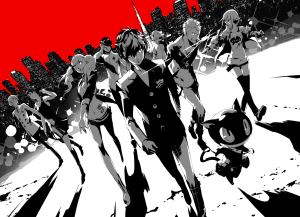
As the story progresses, we see Ren develop relationships with not just his fellow Phantom Thieves, but to the people around him. While optional, these relationships are key to receiving in-game benefits as well as developing the core themes of the story. Throughout these side stories, Ren helps his confidants with their issues simply because they’re his friends and it’s the right thing to do. He runs with his best friend Ryuji, a fellow Thief who’s leg was intentionally broken after he spoke out against crooked Volleyball coach Kamoshida. He helps the shut-in Futaba gain the courage to face the outside world through small challenges on her “promise list.” He even developed a genuine friendship with Akechi, a man actively seeking to destroy the Phantom Thieves (we’ll focus on these two’s relationship later). Ren demonstrates time and time again that he is steadfastly loyal to his friends, no matter if they have wronged someone or have been wronged. He genuinely cares for the people around him in spite of their flaws, believing in their ability to better themselves.
Ren’s compassionate faith in humanity contrasts with the cruel detachment of the game’s penultimate villain, corrupt congressman Masayoshi Shido. Shido believes the population of Japan to be incompetent and beneath him and thinks himself untouchable due to his high status. He lies, cheats, abuses, and contributes to the murders of many characters within the game in order to further his own agenda; manipulating the lost Akechi as the teen tries to get vengeance for the way Shido treated his mother. The congressman’s goal is total power to do whatever he wants. He doesn’t care about the desires of the people around him because to him they are all criminals hiding their true selves. The Phantom Thieves oppose this ideology because, to them, taking away a person’s chance to try, even if they have messed up time and time again, is one of the worst things someone could do. They don’t fight to uphold the status quo or follow what law enforcement wants, they fight to give people the chance to be true to themselves without encroaching on the freedoms of others. To embrace their true selves and be free.
This sentiment is directly said in Persona 5’s opening theme Wake Up, Get Up, Get Out There, the title itself a call for people to stand up and face the world. Lyn ( the lead vocalist for a majority of the game’s soundtrack) tells the audience to “take the mask off and be free,” “fuel your anger like fire,” and to “find yourself in the debris.” It’s simple, yet internally difficult instructions to accomplice; to take your “mask” and let your true self free to stand tall against strife (which is mirrored in gameplay, as the Thieves literally tear their masks from their faces to fight with the embodiment of their true selves), which is terrifying. Opening your heart runs the risk of being hurt or ignored, but, as long as you stay strong and feed your resolve, your “anger,” you’ll always be able to eventually pick up your missing pieces; and if you need help from those close to you, that’s perfectly fine as well, as we are made up of our connections.

Speaking of connections, I believe that, to better understand the game’s messaging, we focus on arguably the most important bond in the entire game: Ren and Akechi. The two have a very… strange relationship, with the best way to simply describe it would be as the situation-ship to end all situation-ships (as most homoerotic rivalries are in anime and manga, if you’d excuse the crude description). The rivals are two sides of the same coin, both being labeled as “Tricksters” (people who hold the power to change the world through their bonds) with the main difference being in how they responded to the bad events in their life. Ren was able to surround himself with people for love and care for him—allowing the teen to break his chains and grow stronger via his bonds—whereas Akechi was left isolated ever since his mother’s death when he was a child. Akechi wasn’t cared for, with his fans raving about a false “detective prince” persona as he simmers with anger and grief underneath. The only person who is able to look passes the detective’s mask without hating him is Ren; even as Akechi attempt to murder him, Ren can’t abandon someone he cares about. It’s something that Akechi loathes about him, mistaking Ren’s empathy as pity, hounding the teen for an explanation during their final confrontation. It is a tragedy because, deep down, Akechi also appreciates Ren’s company, he knows that the thief can bring out the best of him and vice versa. Akechi even toys with the idea of them meeting earlier in life, before his chains dragged him so far down, maybe then they could have been actual friend.
The two’s paths diverge for one final time as Akechi, exhausted from fighting the Thieves, seals himself within Shido’s palace with a platoon of enemies, his first and final act of true rebellion done to ensure the Thieves can escape and confront the congressman. His fate, while ambiguous, isn’t the reason why I bring this act up. Akechi still despises the Phantom Thieves, with the feeling being mutual between everyone except Ren, but—in what might have been his final moments—he was able to let go of his past to do the right thing. The boy laughs as Ren mentions their “promise” before disappearing, the thief happy that his friend was able to overcome hate.
Overall, Persona 5 is a game that encourages you to take your time and enjoy everything the game has to offer. Time is limited, which the game reflects with its calendar and deadline system, and how you use that time is completely up to you. No two experiences with Persona will be the same, with the reason being that everyone thinks differently. Some people might focus on developing their relationships with the other Phantom Thieves, others might focus on the civilian relationships, and other might take pleasure in boosting social stats (kindness, guts, charm, intelligence, and proficiency), and that’s okay. How you live your life is your choice, that’s what Persona 5 tells you: to not let anyone restrict your desires and, no matter how far apart you may be, no matter how fuzzy the memories get, the connections you make with those you love keep you connected in the stars.